
João Paulo Carvalho – Christer Carlsson

João Paulo Carvalho has a PhD (2002), a MSc (1996) and an Electrical and Computer Engineer (1992) degree from Instituto Superior Técnico, University of Lisbon, Portugal (Técnico Lisboa), where he is currently a Tenured Associate Professor at the Department of Electrical and Computer Engineering. He has lectured courses on Computational Intelligence, Distributed Systems, Entrepreneurship and Technology Transfer, Computer Architectures and Digital Circuits since 1999. He is a researcher and Executive Director of INESC-ID, where he has coordinated 5 funded research projects and participated in more than a dozen national and European funded projects. He was listed in the “World’s Top 2% Scientists” both for “2020 and 2021 impact” and “Career Impact from 2021 to 2024” in his field (Elsevier, Stanford University). His current main research interests involve developing and applying new Computational Intelligence techniques to natural language processing, text mining, social network analysis, social sciences and earth sciences. He has authored over 140 papers in international scientific Journals, books and peer-reviewed conferences. He is Area Editor of Fuzzy Sets and Systems, and of Journal of Ambient Intelligence and Humanized Computing, and Associate, and Editor of 3 other international Journals. He was the General Chair of IPMU2024 and IPMU2020, Program co-Chair and organizer of IFSA-EUSFLAT2009, Webchair of the 2010 IEEE World Congress on Computational Computation, Publicity-chair of FUZZ-IEEE2015 and FUZZ-IEEE2017, Program-Chair of IPMU2016, PR and Publicity-chair of IEEE-WCCI2018, and is a PC member of more than 30 international conferences.
Title: TBD
Abstract: TBD
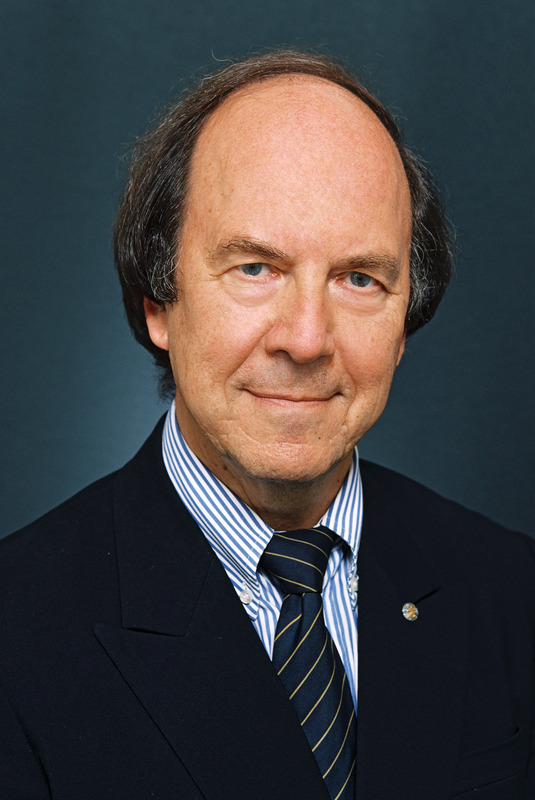
Christer Carlsson is Professor of Management Science at Åbo Akademi University, where he was a tenured professor from 1985 to 2014. He served as Director of the Institute for Advanced Management Systems Research from 1992 to 2014 and as its Research Director from 2015 to 2017. He was also President of the International Fuzzy Systems Association from 2013 to 2015 and has served on the editorial boards of several international scientific journals.
His research started with mathematical systems theory and operational research and later expanded to multi-criteria optimization, decision support systems, fuzzy optimization, foresight, soft computing, mobile value services, knowledge mobilization, and digital services. His research areas include mobile value services, digital services, digital coaching, and computational intelligence. He has published extensively and supervised 37 doctoral students.
Title: TBD
Abstract: TBD
MORE SPEAKERS TO BE ANNOUNCED SOON